
ball knowledge game
Ball Knowledge Games: Daily Sports Guessing Games to Try
A player-first wiki guide to ball knowledge games, daily sports guessing games, and football or soccer guessing games, with verified mechanics, practical tips, and Krillion Wiki tool links.

Ball Knowledge Games: Daily Sports Guessing Games to Try
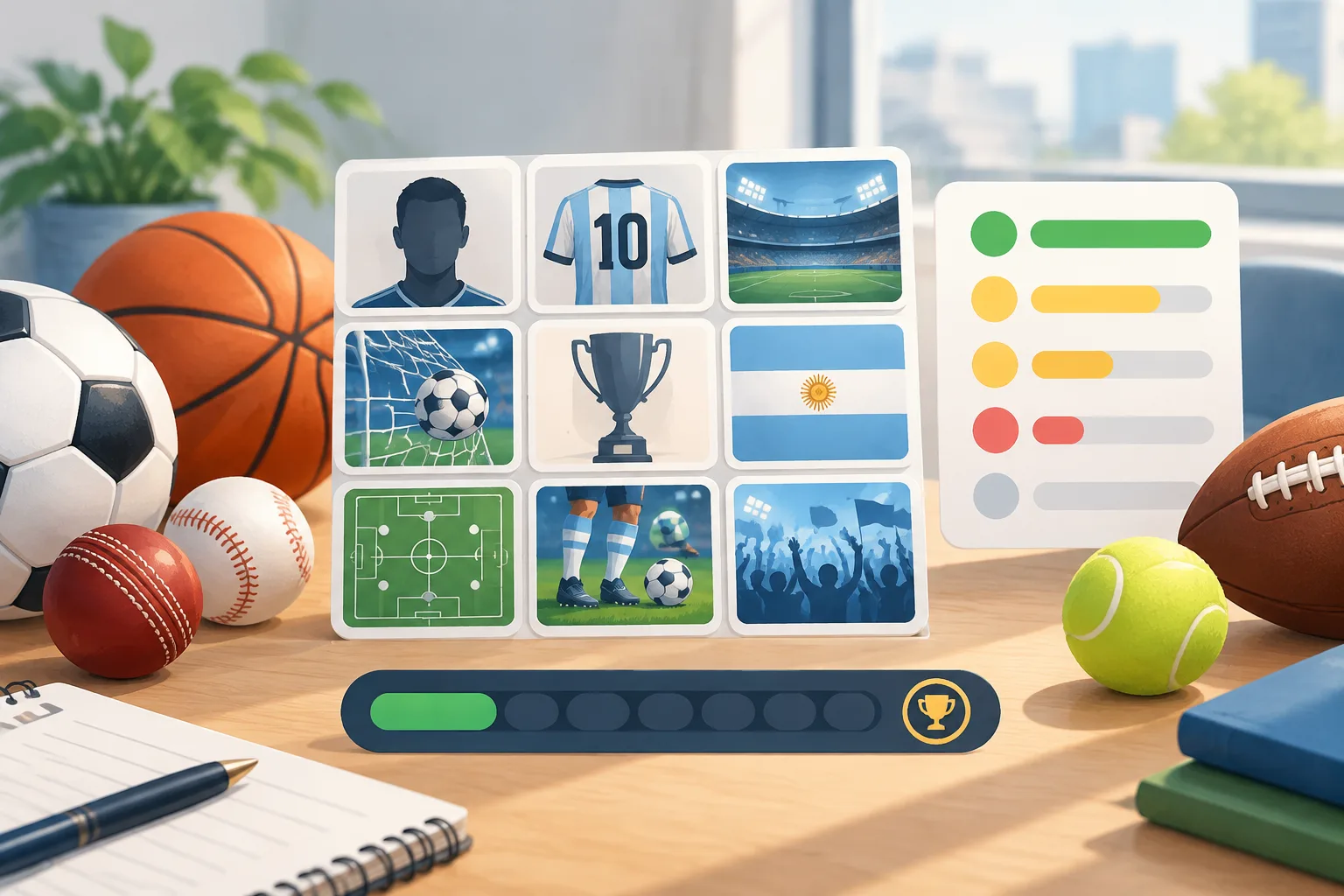
A ball knowledge game is a sports-themed guessing game where you identify players, clubs, scorelines, or events from limited clues. Many are daily, browser-based, and shareable. The phrase is most common in football and soccer communities, but basketball, cricket, and general sports versions exist. This wiki guide explains formats, verified mechanics, community strategy, and practical ways to improve.
What Is a Ball Knowledge Game?
A ball knowledge game is a quiz-like sports game that tests recall of players, teams, leagues, or match details. Players usually receive clues, make guesses, and get feedback after each attempt. The game may be themed around football, soccer, basketball, or multiple sports, and it often resets daily.
The key feature is recall under constraints. Unlike a live fantasy sports app, a ball knowledge game does not require real-time match data or betting. It asks what you already remember and how quickly you can narrow possibilities.
Core traits of ball knowledge games
- A fixed puzzle or prompt for a set period.
- Limited attempts, time, or score penalties.
- Feedback after each guess.
- Sports-specific memory categories.
- Often a spoiler-free shareable result.
How Do Daily Sports Guessing Games Work?
Most daily sports guessing games give every player the same puzzle for a 24-hour window. You submit guesses and receive feedback such as correct, close, or wrong. Some games limit attempts, while others score speed, rarity, or accuracy. The next puzzle usually appears at a set local or global reset time.
The clue-and-feedback loop
A typical loop has three stages: clue, guess, and response. The clue may describe a league, position, nationality, era, or achievement. The guess is your answer. The response tells you whether you are correct and sometimes how close you are. For example, a player game might tell you that a guessed player shares a nationality but not a club.
Attempt limits and scoring
Some games give six guesses, some give three, and others allow unlimited guesses with a score penalty. Scoring is often the main difference between casual and competitive play. In Krillion-style rarity scoring, the score depends on how uncommon your answer is. You can model that with the score calculator.
Sharing and streaks
Many daily games use a share button that copies a spoiler-free grid. The grid shows your pattern of correct and incorrect guesses without revealing the answer. Streaks track consecutive days played. These features are social, but they do not change the puzzle itself.
Is a Football Guessing Game the Same as a Soccer Guessing Game?
There is no mechanical difference. Football guessing game is the term used in countries where football means association football; soccer guessing game is common in the United States, Canada, and Australia. Both describe clue-based games about players, clubs, competitions, or match events. Search both terms if you want more options.
Why the names differ
Association football is called football in most of the world. In regions where another code is also popular, soccer became the common short form. A daily football guessing game and a daily soccer guessing game usually point to the same type of puzzle.
Which term should you search?
Use football if you follow Premier League, La Liga, Serie A, Bundesliga, or international tournaments. Use soccer if you are searching from the United States or Canada. Many sites now use both terms in titles and descriptions.
What Is the Difference Between Verified Mechanics and Community Strategy?
Verified mechanics are rules published by the game itself: guess limits, reset times, scoring formulas, and answer reveal methods. Community strategy is player-made advice, such as starting with high-frequency leagues or using transfer history. Treat strategy as helpful but unproven unless the game confirms it. Always separate the two when learning a new game.

Verified mechanics checklist
Before you trust a tip, check the official rules page or in-game help. Look for:
- Number of guesses per puzzle.
- Daily reset time and time zone.
- Scoring formula or rarity rules.
- Hint availability.
- Archive and practice modes.
- Whether answers are shared globally.
Community strategy (unverified)
The following ideas are common community advice, not official rules: start with broad categories, track your miss patterns, and memorize eras instead of individual answers. They may help, but they are not guaranteed to improve your score. Label them as unverified until the game confirms them.
How Can You Get Better at Ball Knowledge Games?
Improve by building a mental index of players, clubs, leagues, and eras, then practicing recall under constraints. Start with broad categories, narrow by nationality or position, and review your miss patterns. Daily repetition matters more than last-minute cramming. Use answer archives, but avoid memorizing only one game's answer list.
Build era and club buckets
Group knowledge by era and club. For example, learn key players from the 1990s, 2000s, and 2010s separately. Then connect them to clubs and competitions. This makes clues easier to place because you can narrow the era before you narrow the name.
Practice recall, not recognition
Recognition is seeing an answer and knowing it. Recall is producing the answer from a clue. Ball knowledge games test recall. Practice by covering answer lists and writing names from memory. This is harder, but it matches the actual game loop.
Review misses without spoiling future puzzles
After a daily puzzle ends, note the category you missed: nationality, transfer path, trophy history, or position. Do not simply memorize today's answer. Instead, study the category so you can solve a different puzzle tomorrow. For Krillion-style rarity games, the answer library can help you review uncommon answers.
Use hints and archives responsibly
Hints can teach you how a game thinks. Archives can help you practice when you miss a day. However, overusing spoilers reduces the recall benefit. Try to solve first, then review. If you are comparing daily game formats, the Daily Guessing Games page covers common structures.
Are Ball Knowledge Games Good for Casual Sports Fans?
Yes. Most ball knowledge games are designed for casual fans because they use multiple-choice, hints, or limited attempts. Deep league knowledge helps, but daily play rewards curiosity and memory. Beginners can start with player-name or badge-based games before trying scoreline, squad-number, or transfer-path puzzles.
Beginner-friendly formats
Player-name guessing, badge matching, and multiple-choice trivia are usually easier. They give clear feedback and do not require exact statistical recall. Casual fans can still enjoy the daily routine and learn from the answer reveal.
Formats that demand deeper knowledge
Scoreline prediction, lineup completion, transfer-path tracing, and shirt-number games are harder. They reward fans who follow contracts, youth academies, and historical match records. If you are new, treat these as longer-term learning games rather than daily streaks.
How Do Ball Knowledge Games Connect to Krillion?
Krillion is a daily rare-answer trivia game, not a football-specific guessing game. Its core loop, guessing uncommon answers, scoring rarity, and comparing results, overlaps with sports guessing games. Krillion Wiki covers both Krillion mechanics and general daily guessing game topics. Use the wiki to compare formats and the tools to practice scoring.
Krillion-specific details on this page reflect the Krillion Wiki's currently documented sections: Daily Dive, Rarity Scoring, Packs, Unlimited Mode, Leaderboards, and Answer Reveal Archive. Live games can change, so verify current rules in-game.
Shared skills
Both Krillion and sports guessing games reward broad recall, category knowledge, and risk management. You must decide whether to guess a safe answer or a rare answer. You must also learn from feedback without overfitting to one puzzle.
Where Krillion differs
Krillion uses rarity scoring rather than a simple correct-or-wrong format. That changes strategy because a correct but common answer may score lower than a rare answer. For more on this style, see Krillion prompt categories and the Packs guide. To compare daily formats, read Games Like Krillion.
What Types of Sports Guessing Games Can You Try?
Common categories include player identification, club history, scoreline prediction, lineup completion, transfer paths, shirt numbers, and tournament trivia. Some games mix categories into a daily grid. The best category for you depends on whether you remember names, numbers, or match events.
Player and club identification
These games show clues about a player or club and ask you to name them. Clues may include nationality, position, former clubs, trophies, or shirt numbers. They are the most common type in football and soccer communities.
Scoreline and match event games
These games ask you to predict or recall a final score, scorer, or match event. They require stronger memory of specific matches and tournaments. Some are daily, while others are tied to a live match calendar.
Grid and category games
Grid games ask you to fill categories with valid players or teams. For example, you might need a player who played for two specific clubs. These games reward flexible recall across leagues and eras.
Rarity and answer-reveal games
Rarity games score how uncommon your answer is. They often reveal the answer distribution after the puzzle closes. Krillion is an example of this style, and its answer library is a useful reference for studying rare answers.
How Should You Choose a Daily Sports Guessing Game?
Choose based on sport, time per day, clue style, and whether you want solo or social play. Football fans may prefer player-ID games; general sports fans may like grid or scoreline games. Check if the game resets daily, has an archive, and explains its scoring.
Quick checklist
- Sport or league coverage.
- Daily reset time that fits your routine.
- Clue style: text, image, stats, or grid.
- Attempt limit and hint system.
- Scoring transparency.
- Archive and practice modes.
- Mobile browser support.
- Community discussion without spoilers.
Match the game to your knowledge
If you remember names, choose player-ID games. If you remember matches, choose scoreline or event games. If you remember relationships between clubs and players, choose grid games. If you enjoy risk and rarity, choose a rarity-scoring game like Krillion.
Frequently Asked Questions About Ball Knowledge Games
What is a ball knowledge game?
A ball knowledge game is a sports guessing game that asks you to identify a player, team, score, or event from clues. It usually has limited attempts and may reset daily. The term is common in football and soccer communities, but similar games exist for other sports.
Is a football guessing game the same as a soccer guessing game?
Yes. The mechanics are the same. Football is the standard term in most countries for association football, while soccer is common in the United States, Canada, and Australia. Search both terms to find more daily sports guessing games.
Are ball knowledge games free to play?
Many browser-based ball knowledge games are free and ad-supported, but some offer paid packs, extra modes, or subscriptions. Check the game's own site for current pricing and features. Krillion Wiki does not sell game access or guarantee third-party pricing.
How many guesses do daily sports guessing games give?
There is no single standard. Some games give three guesses, some give six, and others allow unlimited guesses with a score penalty. Always read the official rules page for the specific game because attempt limits can change with updates.
Can I play ball knowledge games without deep sports knowledge?
Yes. Many games use hints, multiple-choice answers, or broad categories that help casual fans. You may score lower in expert modes, but daily play can build recall over time. Start with player-name or badge games before trying scoreline or squad-number puzzles.
What is the best way to practice for a ball knowledge game?
Practice by reviewing eras, clubs, and competitions in small sets, then testing recall without notes. Track the categories you miss most. For Krillion-style rarity games, study the answer library and use the score calculator to understand how uncommon answers affect your score.
Try Your Own Daily Guessing Game
Ready to test your recall? Use the Krillion score calculator to see how rarity changes your daily score, or browse the answer library to study rare answers. For more daily game comparisons, read Games Like Krillion and Daily Guessing Games. If you want to understand Krillion's pack and mode structure, start with the Packs guide.